Pedro Rodriguez has officially announced his retirement from professional football, bringing the curtain down on one of the most decorated careers in modern football.
The Tenerife-born forward confirmed the news in an emotional message on social media, saying he felt the time had come to “take a step forward” and begin a new chapter in his life.
After almost two decades at the highest level, Pedro leaves the game having won virtually everything there is to win.
From Barcelona's famous La Masia academy to the biggest stages in world football, his career is a remarkable example of what can happen when talent, hard work and the right mentality come together.
Pedro Rodriguez's Trophy-Laden Career at Barcelona
Pedro's list of honours tells the story of an extraordinary career.
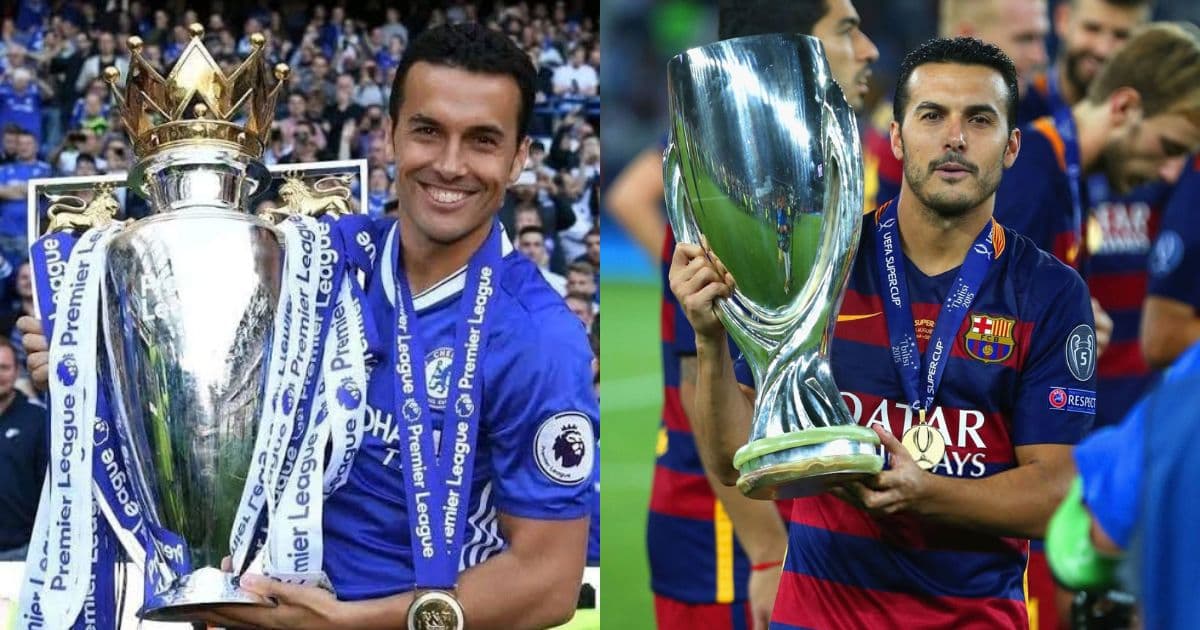
During his time at Barcelona, he won five La Liga titles, four Spanish Super Cups, three Champions League titles, three UEFA Super Cups, three Copa del Reys and two Club World Cups.
He was also part of the Barcelona side that produced one of the greatest seasons in football history.
Under Pep Guardiola, the Catalan giants won the famous sextuple in 2009, claiming La Liga, the Copa del Rey, Champions League, Spanish Super Cup, UEFA Super Cup and Club World Cup.
Pedro played a significant role in that historic team.
He became the first player to score in all six official competitions contested by Barcelona in the same season, finding the net in La Liga, the Copa del Rey, Champions League, Spanish Super Cup, UEFA Super Cup and Club World Cup.
But his success did not stop in Spain.
How Pedro Rodriguez Continued Winning at Chelsea and Lazio
After becoming a key part of Barcelona's first team, Pedro eventually made the move to England.
Chelsea signed him in 2015, giving the forward the chance to experience the Premier League.
He quickly added another major honour to his collection, helping Chelsea win the Premier League title during the 2016/17 season under Antonio Conte.
Pedro also lifted the FA Cup with Chelsea in 2018.
His career later took him to Italy, where he played for Roma before spending his final five seasons with Lazio.
Across Barcelona, Chelsea and Lazio, Pedro demonstrated his ability to adapt to different leagues, managers and tactical systems.
Pedro Rodriguez's World Cup and EURO Triumphs With Spain
Pedro's international career was just as impressive.
The forward became part of one of the greatest generations in Spanish football history, making his senior debut in 2010.
That same year, Spain won their first FIFA World Cup in South Africa.
Pedro featured throughout the tournament, including in Spain's semi-final victory over Germany, before helping La Roja defeat the Netherlands in the final.
Two years later, he added another major international trophy to his collection.
Spain won UEFA EURO 2012, defeating Italy 4-0 in the final.
That meant Pedro became part of the select group of players to win the World Cup, European Championship and Champions League during their careers.
His international career ultimately produced 65 appearances and 17 goals for Spain.
How La Masia Shaped Pedro Rodriguez's Career
Perhaps one of the most important parts of Pedro's story for young footballers is where it began.
Before he was scoring goals at Camp Nou, winning Champions League titles or lifting the World Cup, Pedro was simply another young player trying to make his way through Barcelona's academy system.
He joined Barcelona's youth system at 17 after developing in Tenerife.
The pathway was not straightforward.
Pedro had to work his way through Barcelona's youth teams before eventually making his first-team debut under Frank Rijkaard in January 2008.
From there, he became one of the most important players in one of the greatest club sides in football history.
His journey is a reminder that academy development is rarely an overnight process.
4 Lessons Young Players Can Learn From Pedro Rodriguez
Pedro's retirement leaves behind more than a collection of medals.
For young players dreaming of reaching the professional game, his career offers some valuable lessons.
Keep improving
Pedro built his game around movement, technical ability, intelligence and finishing rather than relying on physical dominance.
Instead, he developed his movement, technical ability, intelligence and finishing to an elite level.
Young players can take confidence from the fact that becoming a top footballer is not simply about having one standout physical attribute.
Take your opportunities
When Pedro was given his chance by Guardiola, he took it.
He went from an academy player to becoming a key member of a Barcelona side that dominated European football.
Opportunities can arrive unexpectedly, but preparation means being ready when they do.
Adaptability matters
Pedro's career took him from Barcelona to Chelsea and then Lazio.
He worked under different managers, played in different systems and competed in different leagues.
His ability to adapt helped him remain at the highest level for years.
Enjoy the journey
Perhaps the biggest lesson comes directly from Pedro himself.
In his retirement message, he reflected on having “lived my dream” and thanked the people who helped make it possible.
For young players, that is an important reminder.
The ambition to become a professional footballer can sometimes make the journey feel like nothing more than a race towards the next level.
Pedro's career shows why enjoying the process, appreciating teammates and coaches, and remembering why you fell in love with football in the first place matters too.